
Climbing Mount Kilimanjaro is a once-in-a-lifetime adventure. People from around the globe flock to scale the “Roof of Africa.” Proper preparation is essential for a successful summit. Here, we highlight 10 key things you should know before embarking on your Kilimanjaro climb.
Determination
Reaching the summit is all about determination. You’ll likely encounter moments, particularly around Stella Point or Gilman’s Point, where exhaustion and altitude sickness might make you want to quit. In these tough moments, pushing forward step by step is crucial.
However, your health should always come first. Pay attention to symptoms of altitude sickness (AMS) and listen to your guide’s advice, as they monitor your condition closely. If you’re advised to descend, prioritize safety over ambition.
Guides and Porters
Your guides and porters are invaluable on Kilimanjaro. These local experts, primarily Swahili speakers with a good command of English, will support your entire journey. A climbing group typically includes one guide, and each climber is supported by three porters who carry around 15kg of gear. You’ll quickly appreciate their hard work after day one.
Hydration
Staying hydrated is crucial. On the first day, your guide will provide 2-3 liters of water. Porters will refill supplies along the way. It’s important to drink at least 3 liters daily to avoid dehydration, which can contribute to AMS. Energy supplements can make the water more palatable, and purification tablets are essential.
Food on Kilimanjaro
Eating well is key for maintaining energy, especially on summit night. Meals are prepared by your guides and include breakfast (tea, coffee, bread, porridge, eggs, sausage), lunch (soup, bread, stew, sandwiches), and dinner similar to lunch. Carrying energy bars as snacks is helpful, particularly if AMS causes nausea or appetite loss. Even if you’re not hungry, try to eat something, such as a few biscuits, to keep your energy levels up.
Acclimatization
Adapting to altitude is crucial, and everyone experiences AMS differently, regardless of fitness or age. Key tips include going slowly (“Pole Pole” in Swahili), drinking plenty of fluids (at least 3 liters daily), and practicing “climb high, sleep low.” Typically, climbers spend an acclimatization day at 4,600m and sleep lower at around 3,900m.
Weather and Timing
Kilimanjaro has two rainy seasons: March to May and November to February. During rainy months, the Rongai route from the drier northeast is preferred. Rain is less likely above 3,000m, but you may still encounter snow or sleet in higher altitudes.
Kilimanjaro Routes
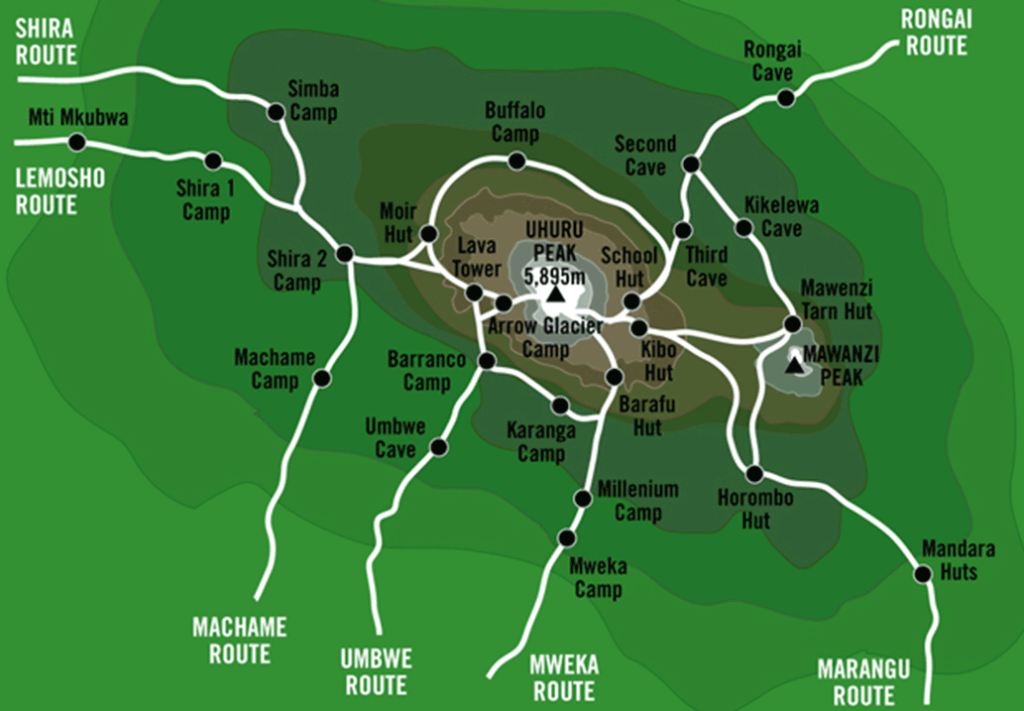
There are seven primary routes to the summit. The Machame, Umbwe, and Marangu routes approach from the south, while the Rongai route is a drier, less crowded option from the northeast. The Lemosho and Shira routes offer stunning scenery from the east. The Northern Circuit is the longest route with high success rates due to ample acclimatization opportunities.
Essential Kit
Proper gear is essential, as Kilimanjaro spans four climate zones. Layering clothing (base thermal, fleece, and outer jacket) is key to staying warm. Quality gloves, hiking boots, and trekking poles are highly recommended. Check out a detailed Kilimanjaro packing list to ensure you’re prepared.
Climbing Skills
Kilimanjaro is primarily a long hike, so no technical climbing skills are needed. However, on routes like Machame, Lemosho, Shira, and Umbwe, you’ll encounter the Barranco Wall, which involves basic bouldering. No special preparation is required for this section.
Fitness Requirements
You don’t need to be exceptionally fit to summit Kilimanjaro. Many highly fit individuals struggle due to exerting themselves early on, which can hinder acclimatization. You’ll be trekking 5-7 hours daily, so basic fitness is necessary, but practice hikes or cardiovascular exercises like running and cycling should suffice for preparation.