
Tanzania is a year-round safari destination, but the best time to visit largely depends on what you want to experience. From witnessing the iconic Great Migration in the Serengeti to spotting the Big Five in Ngorongoro Crater, different times of the year offer unique safari experiences. Here’s a breakdown of the best times to visit Tanzania for a safari:
1. Best Time for Wildlife Viewing (June to October)
The dry season, from June to October, is widely considered the best time for a safari in Tanzania. During this period, wildlife is easier to spot as animals gather around water sources, and the bush is less dense. It’s also the time when there is little rain, and the weather is more predictable with clear skies.
-
Highlights:
- The Serengeti is bustling with wildlife, making game drives particularly rewarding.
- Ngorongoro Crater offers excellent game viewing year-round, but during the dry season, the chances of spotting the Big Five increase.
- Tarangire National Park is famous for its elephant herds and baobab trees, and the dry season attracts large numbers of animals to the Tarangire River.
-
Advantages:
- Fewer mosquitoes and lower risk of malaria due to the lack of rain.
- Cooler, pleasant temperatures, especially in the mornings and evenings.
- Roads and paths in the parks are dry and easier to navigate.
-
Considerations:
- This is peak tourist season, so popular parks and lodges may be more crowded, and prices can be higher.
2. The Great Migration (June to July & January to March)
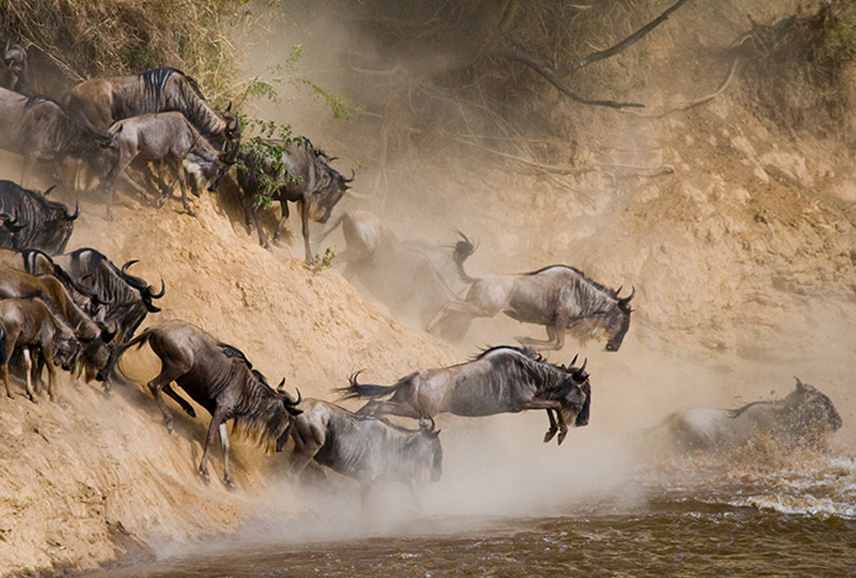
One of Tanzania’s most spectacular natural events is the Great Migration, where millions of wildebeest, zebras, and gazelles traverse the Serengeti in search of fresh grazing grounds. Timing your visit with the migration is an unforgettable experience.
-
June to July: The best time to witness the migration’s famous river crossings at the Grumeti and Mara Rivers in northern Serengeti, where the herds face crocodile-infested waters in their quest for greener pastures.
-
January to March: The herds congregate in the southern Serengeti and Ngorongoro Conservation Area for the calving season. This is an excellent time to see newborn wildebeest, zebras, and predators that follow the herds.
-
Advantages:
- An opportunity to witness the iconic river crossings and calving in the Serengeti.
- Great predator activity as lions, cheetahs, and hyenas follow the herds.
-
Considerations:
- The exact timing of the migration can be unpredictable and may vary each year due to rainfall patterns.
3. Green Season (November to May)
The green season, also known as the rainy season, runs from November to May, and while it’s not the traditional peak season for safaris, it still has its benefits. The rains bring lush landscapes, fewer crowds, and better opportunities for birdwatching.
-
November to December: The short rains begin, but they are usually short-lived and don’t interfere much with safaris. The scenery becomes greener, and animals are still easy to spot. Migratory birds also begin to arrive, making this a great time for birdwatching.
-
January to March: While this is the start of the long rainy season, the rains are typically confined to the afternoons, and the mornings are clear. This period is also ideal for witnessing the wildebeest calving in the southern Serengeti.
-
April to May: This is the height of the long rainy season, and many camps in the Serengeti close due to heavy rains. However, it’s the quietest time of year for tourists, and the landscape is lush and beautiful. Ngorongoro Crater remains a good option for game viewing, as it experiences less rainfall than the Serengeti.
-
Advantages:
- Fewer tourists mean a more intimate safari experience.
- The landscape is green and vibrant, creating stunning photographic opportunities.
- Accommodation rates are lower during this period.
- Exceptional birdwatching as migratory species arrive.
-
Considerations:
- Some areas may be inaccessible due to heavy rain.
- Wildlife may be harder to spot because of the thick vegetation.
- Afternoon rain showers are common, though they are usually brief.
4. Best Time for Birdwatching (November to April)
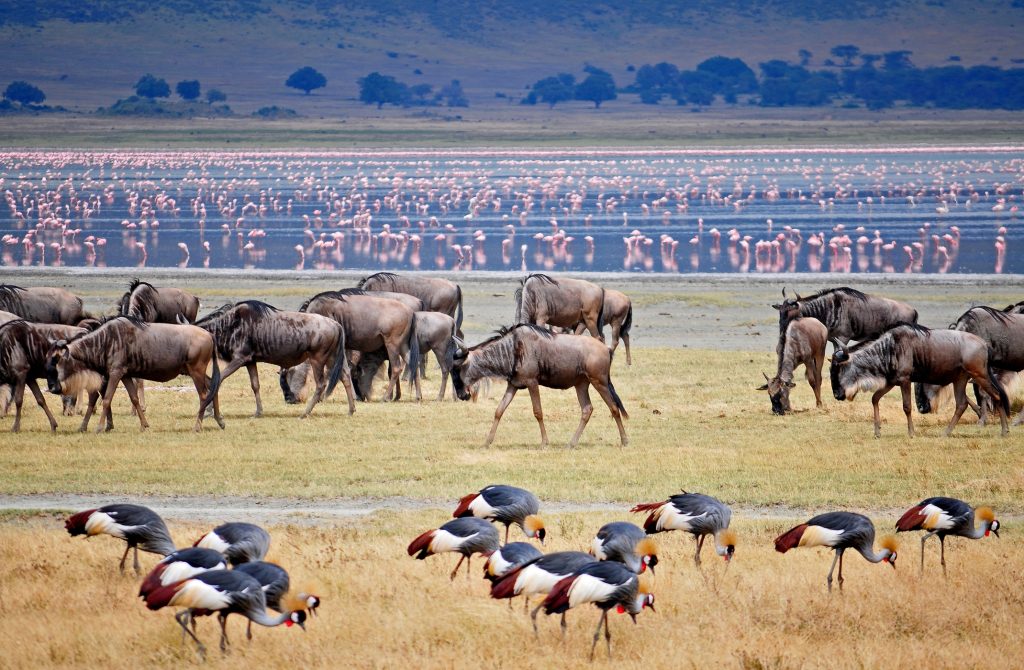
For bird enthusiasts, the wet season from November to April is the best time to visit Tanzania. During this period, the parks are lush, and over 1,000 species of birds, including migratory species from Europe and North Africa, can be spotted.
- Highlights:
- Lake Manyara and the Ngorongoro Crater are particularly rich in birdlife during this time, with large flocks of flamingos and other waterbirds.
- The Serengeti is also an excellent place for birdwatching, with many colorful species and raptors on display.
5. Best Time for Hiking and Adventure (June to October)
If you’re planning to combine your safari with a Mount Kilimanjaro trek or other hiking adventures in Tanzania, the dry season from June to October is the best time. The weather is more stable, and the trails are easier to navigate, providing optimal conditions for climbing Kilimanjaro or exploring other hiking spots like the Usambara Mountains or Mount Meru.
Choosing the Right Time for Your Safari
- June to October is the best time for general wildlife viewing, offering dry conditions and easy-to-spot animals.
- January to March and June to July are perfect for witnessing the Great Migration, including calving and river crossings.
- The green season from November to May is excellent for birdwatching and budget-friendly safaris but may bring some challenges due to rain.
No matter when you visit, Tanzania’s diverse landscapes and rich wildlife guarantee an unforgettable safari experience year-round!